A Forty Year-old Startup
Rediker Software provides technology solutions and student management software for PK - 12 schools. In 2017, Rediker Software’s flagship product, AdminPlus, turned 37 years old and the founder and CEO stepped down and appointed his son-in-law as President. The newly installed President knew that to remain competitive the company needed a complete overhaul of their software and how they managed software development. He decided Rediker would no longer outsource such important work and endeavored to create a 30 person in-house DevOps Team. The kick-off for the next-generation of Rediker products was slated for January 2018.
I was hired by Rediker as their first UX designer in September 2017. I joined their newly formed in-house agile team that consisted of five software developers and a product owner. There was a 4 month window between when I was hired and when the work on the next-gen project was due to start. I saw that 4 months as a unique opportunity to build a solid foundation for the UX team.
Establishing a UX Foundation
Building Bridges and Unifying Visions
I started with conducting stakeholder interviews with all the department heads to get a better overall picture of the current business. This included the President, CTO, Director of Product Operations, Director of Sales, Director of Marketing, Director of Program Operations, Director of Training and Implementations, and Director of Customer Support. I gathered insights from each of them regarding what they wanted from the next generation of software. I felt it was essential to establish a good rapport between UX and the other departments as I was the first UX designer that Rediker had ever hired.
I then met with the product owners of each of Rediker’s existing products in order to gain a better understanding of the current state of our software.
Many product owners were long time employees of Rediker and/or former school administrators and educators. My only experience with primary education was as a student, therefore it was essential that I develop a good repore with the POs. I went into those meetings with a fresh set of eyes and without any preconceived notions, which allowed for a more open exchange.
“why do the users need this?”
“that is how it has always been done”
“what end goal is this solving or what is the job to be done?”
“one school requested this feature, so we are adding it”
“how do users utilize this feature?”
¯\_(ツ)_/¯ ... Rich Rediker wanted it that way.
Many POs were receptive to this process as it revealed the complexity behind improving the user experience of their products. It revealed that simply “adding a button” was not going to sufficiently address the problem. I provided the POs with options with varying degrees of changes so that they could evaluate cost vs. benefit, ie development time vs business value vs slowly implementing changes.
Who are we designing for?
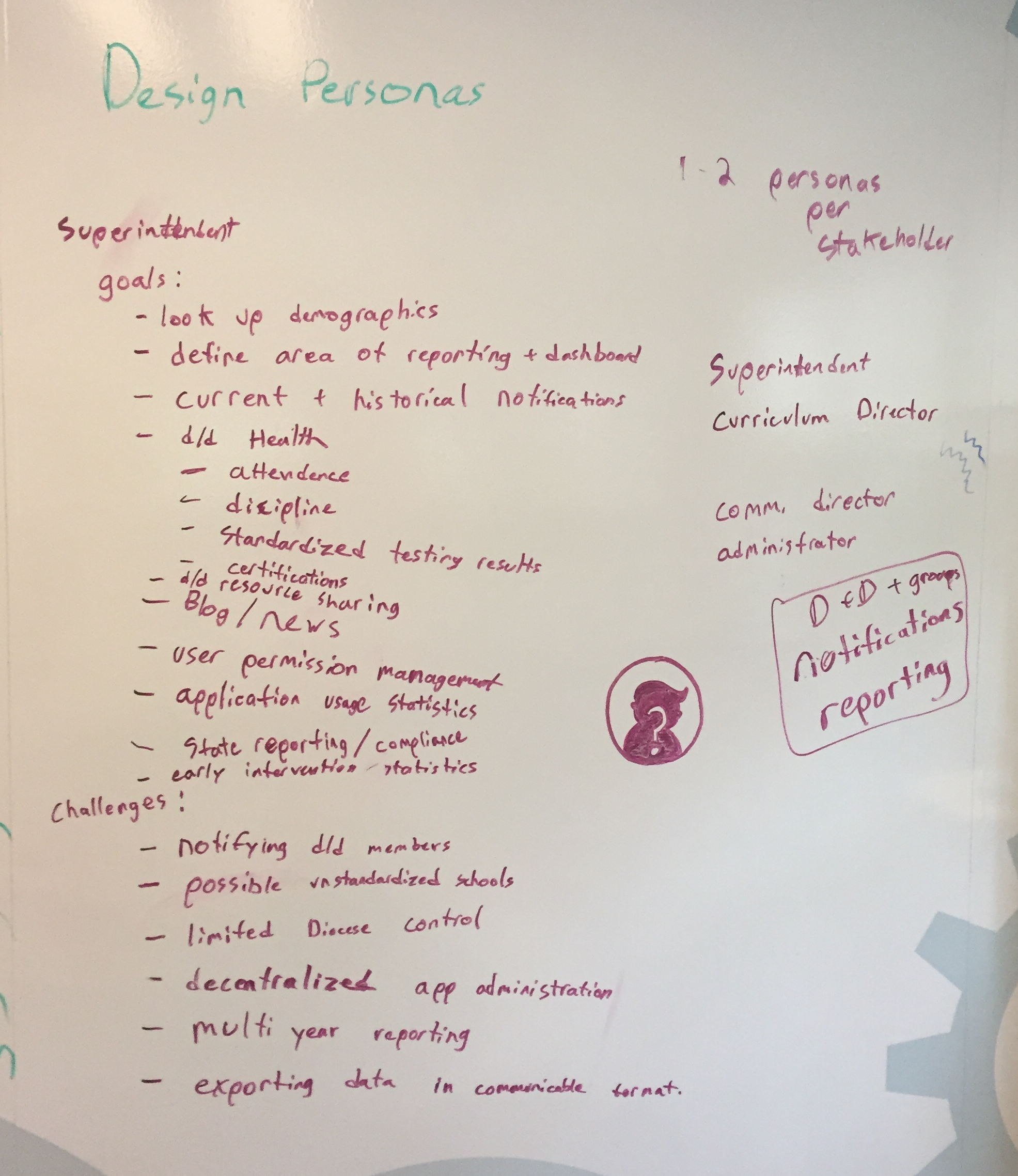
One of my first tasks was to create the superintendent/head of school persona based on the CTO’s notes (he liked using the whiteboard). →
I had to rely heavily on the knowledge of the subject matter experts (SMEs) at Rediker (and of course Google) as I did not have any user research or prior experience developing UI/UX systems in the primary education setting.
Despite these limitations I was able to produce a solid persona that included a summary, challenges, goals and questions. I often thought of the Simpsons whenever I heard the word “superintendent” because it brought to mind “Super Nintendo Chalmers” (a direct quote from Ralph Wigum), so he served as my initial persona. My intention was always to update the image with a real person once we were further into development.
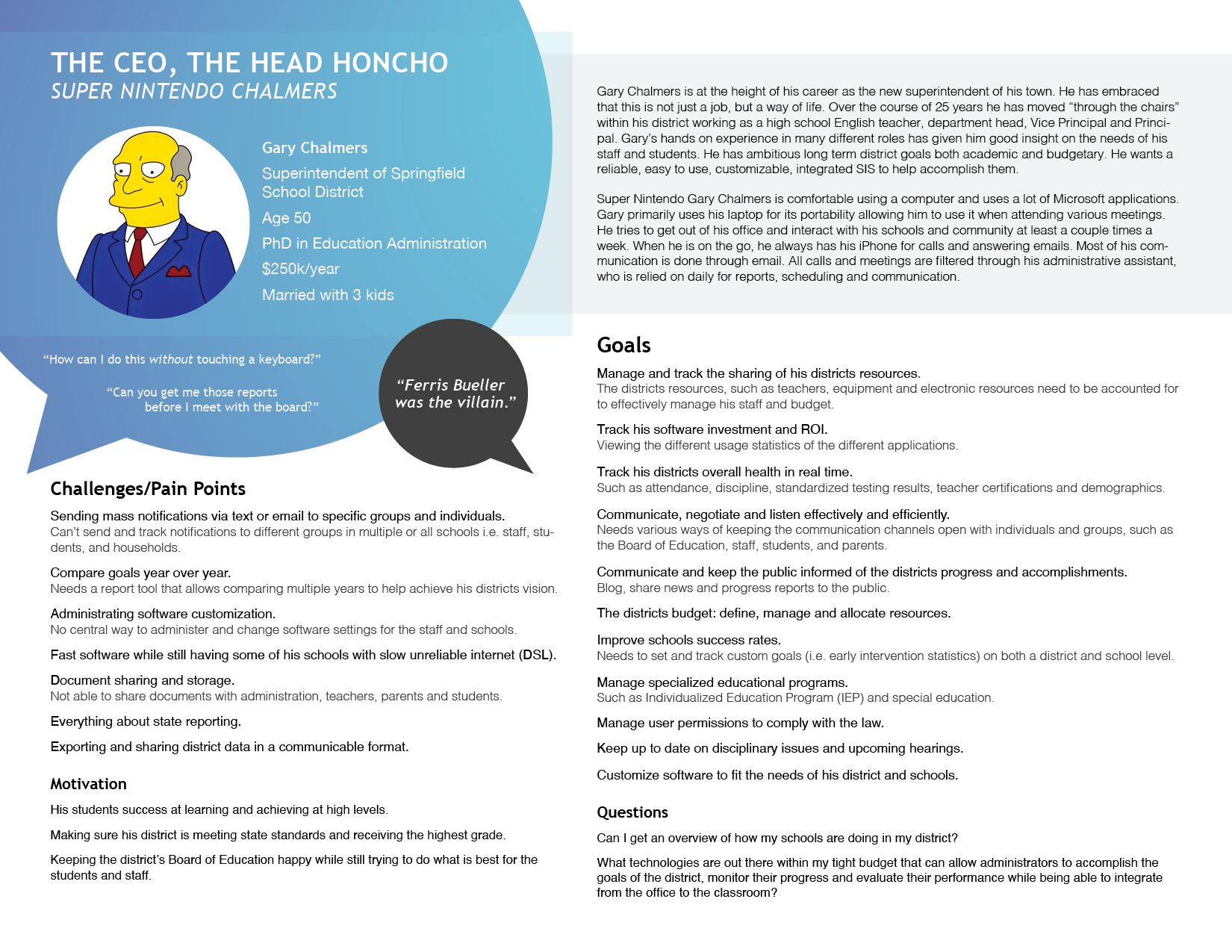
I uploaded the PDF on confluence and shared the link with the stakeholders and SMEs. I received great feedback. I was confident in using this as a template for future personas for the Student Information System(SIS) and Learning Management System (LMS). Although SMEs are a great resource, I did not want to rely solely on them for information going forward. I knew I would need to gather more information straight from the source with user interviews and site visits. I could then validate and make any changes to my persona based on that information.
Building a Foundation of User Research
I knew it was imperative that I visit our users at their schools. Interacting and observing our users in this manner would provide me with invaluable insights to their needs and the struggles they faced every day as educators. I was able to schedule site visits with a few of our existing customers in the area with the help of the sales team, product owners and Rediker’s CEO.
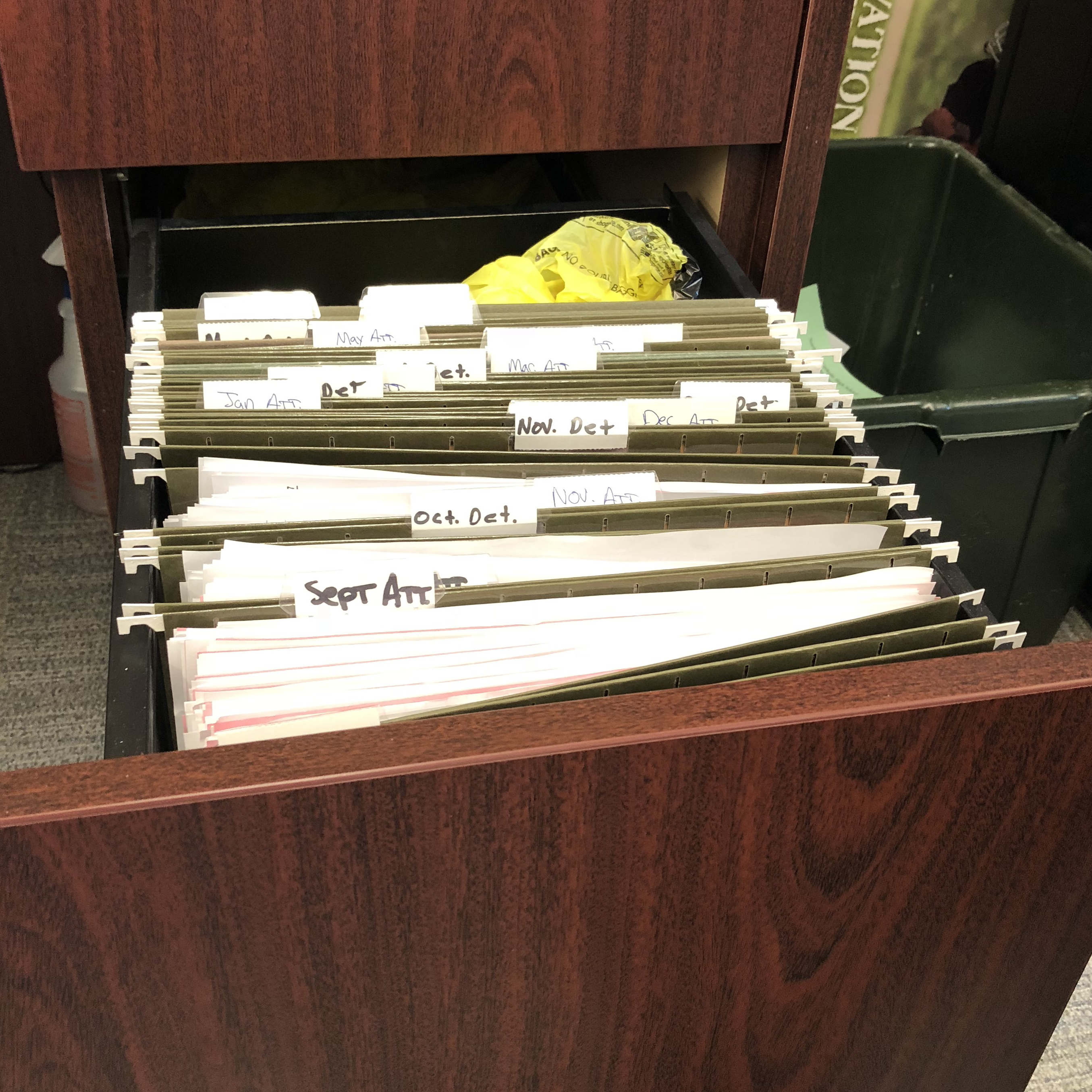
It was an eye opening experience and I gained empathy for our users as I saw them struggle with our current products. It invigorated my passion to help our educators and design for their needs. At one school the users were having such a hard time that I immediately contacted Sales to facilitate setting up additional training. It was invaluable to observe users in real time and witness their work-arounds and interruptions in workflow, not to mention their cheat sheets.
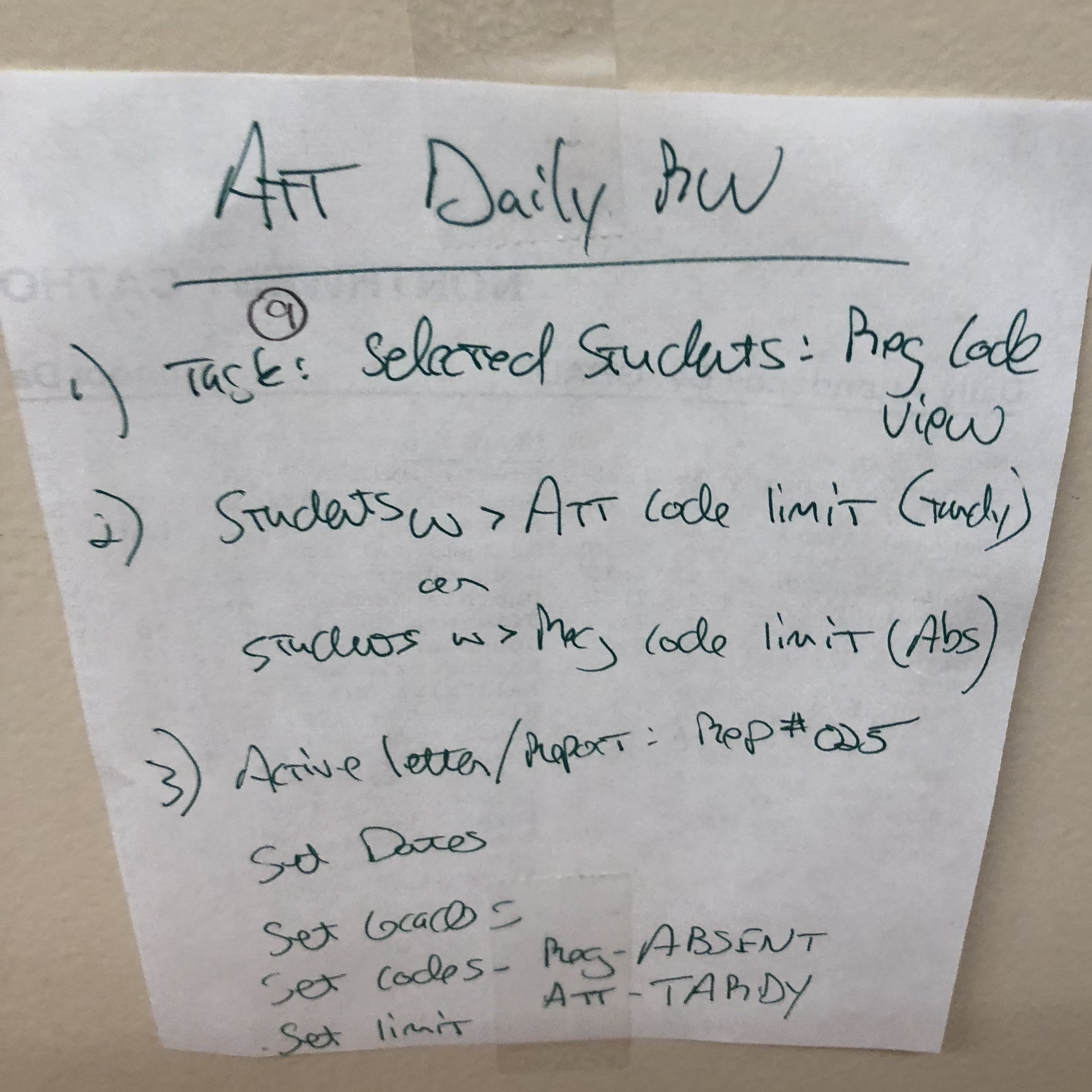
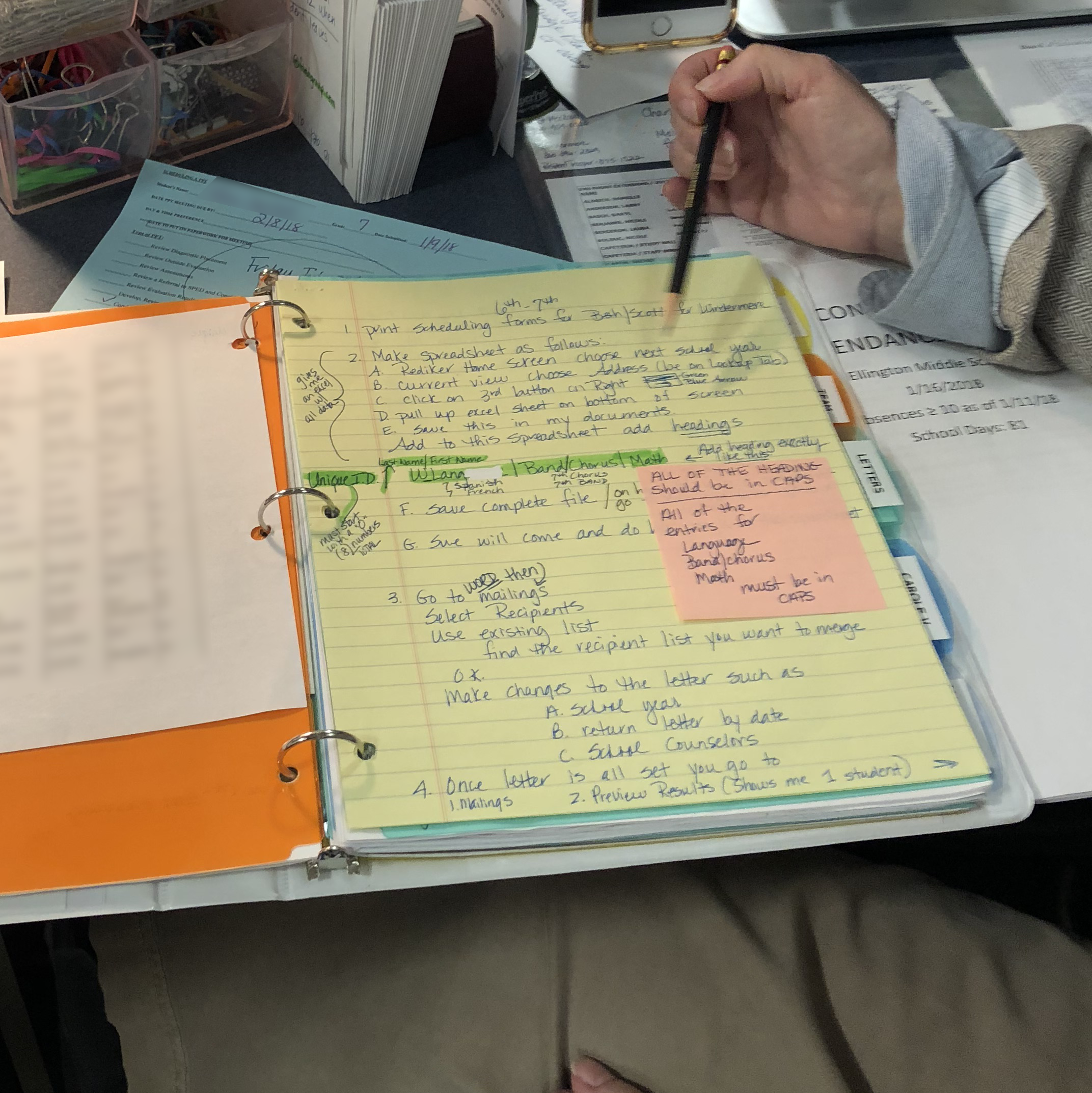
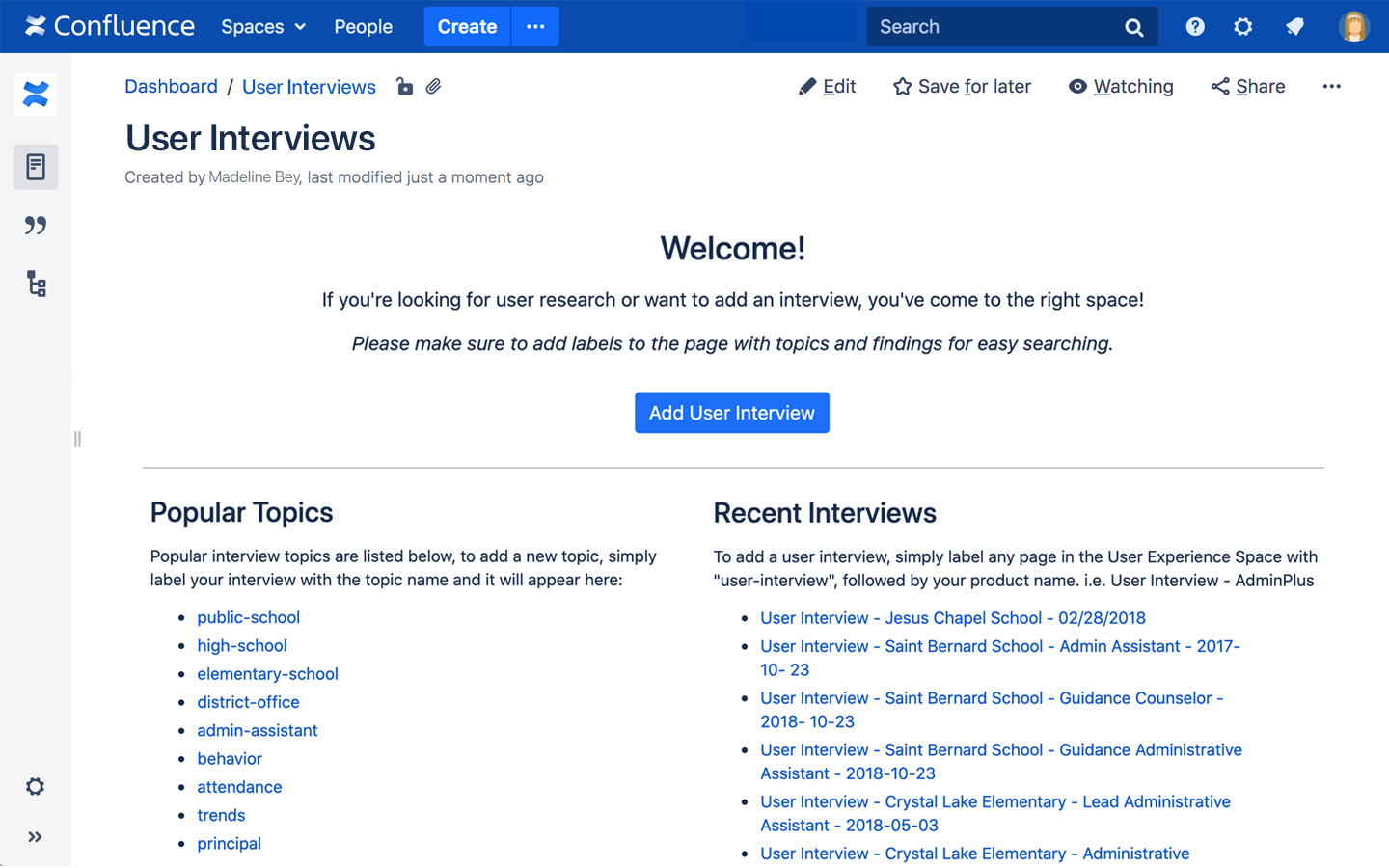
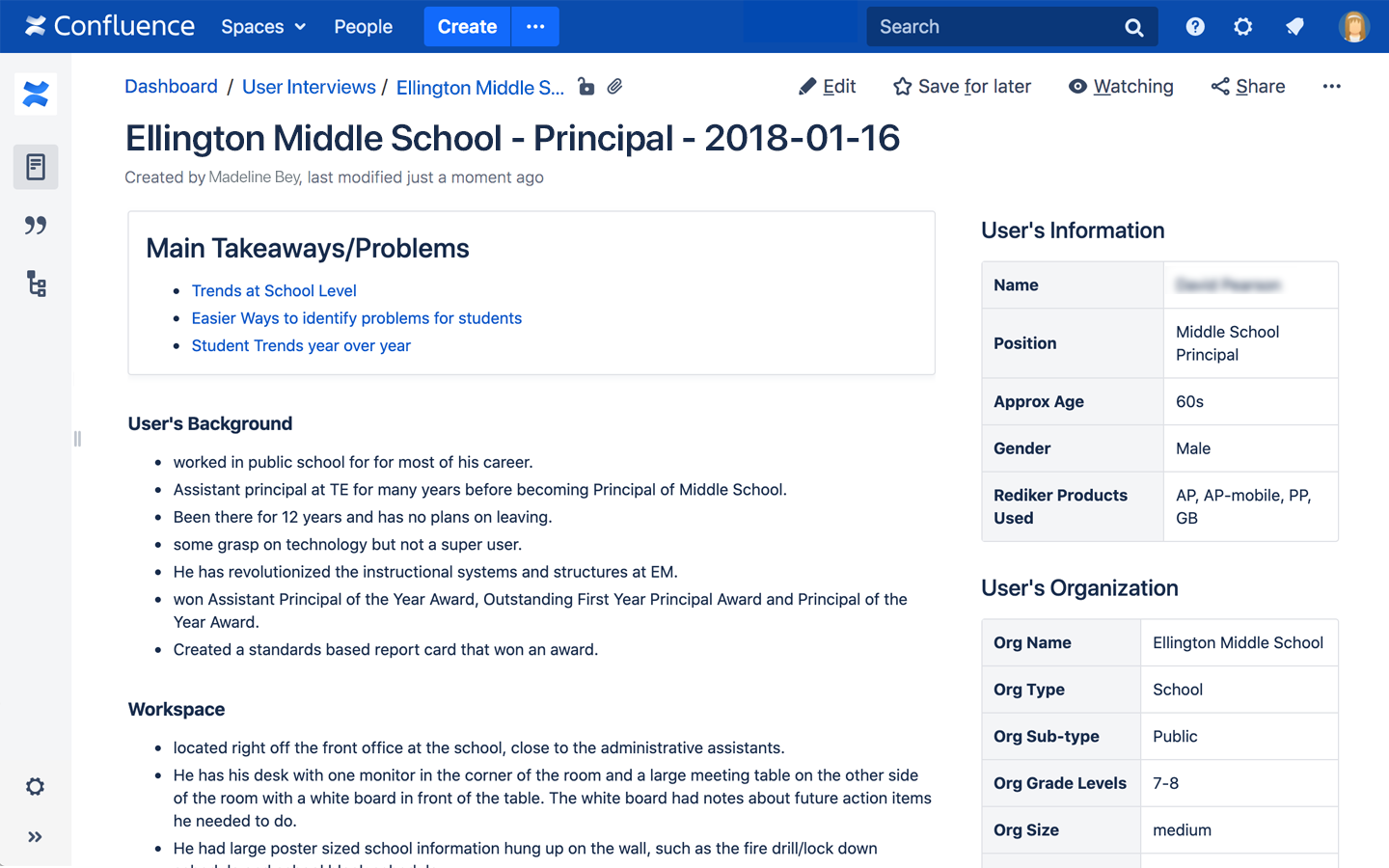
I knew the UX team would expand and wanted to develop a process by which any future hire could review information from the interviews that I had recorded with oneNote. Thus, I created a user research database on Confluence with each interview getting its own page. I condensed information into bulleted notes and included sections for “key takeaways” and “insights”. I tagged each page with relevant keywords and phrases to ensure the database had an easy search function.
Growing and Leading the Team
I attended meetings with the PO, CTO, Director of Product Operations and Scrum Master to establish how UX would fit into the new and growing DevOps teams. I was determined to make sure UX had a say in decision making and product strategy.
As additional teams and other products were added, I ensured that the UX process evolved to meet the needs of each agile team.
Even though I started out as a solo designer, product design is a team sport and the team grew to a total of 4 designers (including myself). I mentored the younger designers in product design standards, technical feasibility, front-end coding, user research and testing, and lean UX and Agile methodologies. As a Team Lead I touched most designs through direction, collaboration, or regular critique. These three highlight a few of many projects I designed at Rediker:
Creating and managing a shared responsive design system across multiple applications and ensuring high-visibility and widespread use across the company.
Taking a 40 year-old flagship school administrative desktop application to the web.
The classroom portion of a full product solution for schools by focusing on teachers, students and parents.